
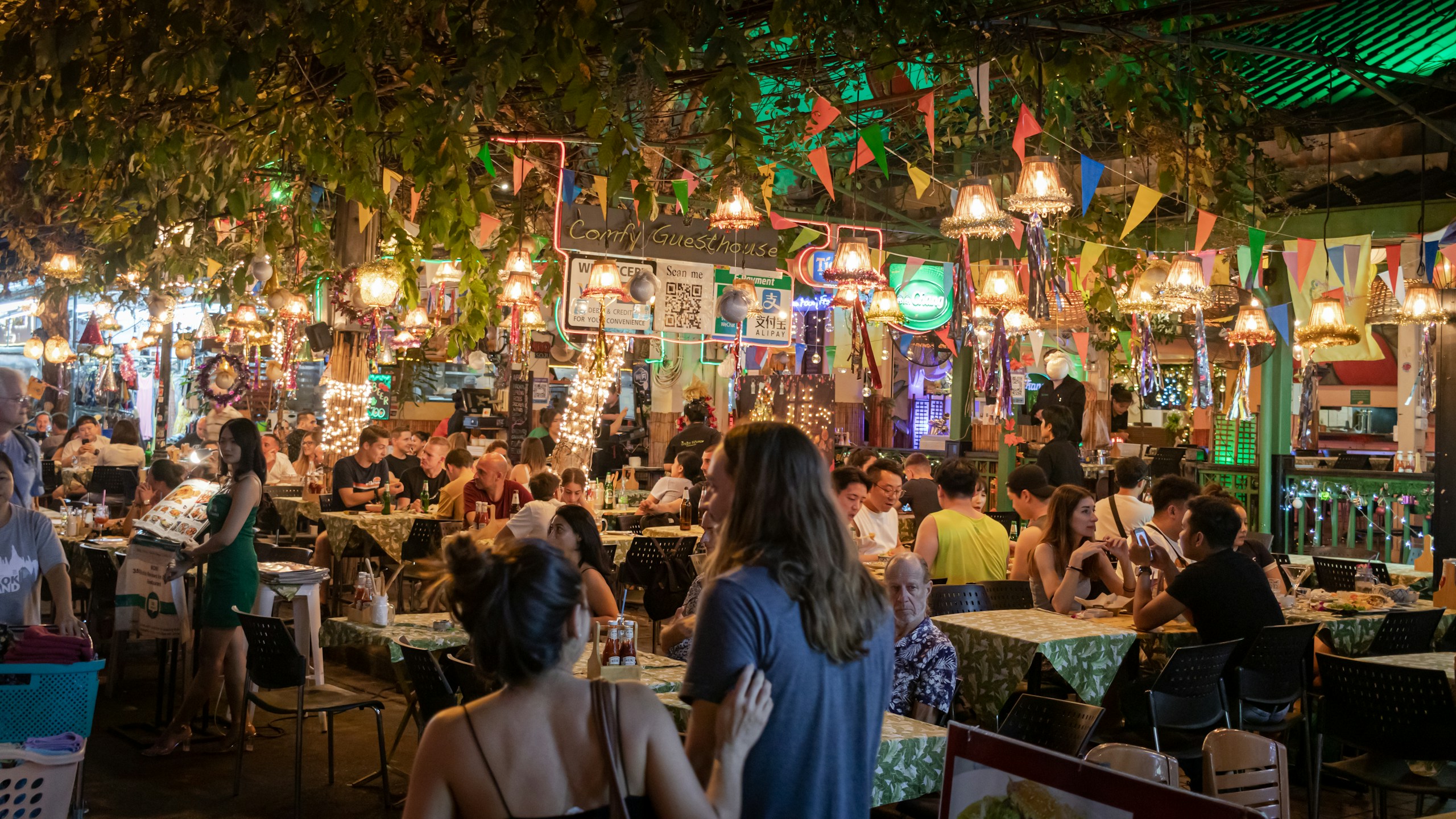
The average UK restaurant loses approximately £56,000 a year to missed calls. Not from bad food or poor service, but from a phone that rang out during dinner service while every member of staff was focused on the room.
It’s a strange kind of revenue loss because it leaves no obvious trace. Nobody logs a missed booking as a lost sale. There’s no line on the P&L that reads ‘unanswered calls.’ The money simply doesn’t arrive. And because the problem tends to peak precisely when your restaurant is at its busiest, it can feel like an unavoidable consequence of success – the price you pay for a full dining room.
The Numbers Behind an Unanswered Phone
The starting point is call volume. According to HungerRush’s 2024 restaurant dining trends research, quick-service restaurants handle between 50 and 75 calls a day on average, with around 150 calls going unanswered every month. For full-service restaurants and independents, the numbers are different but the pattern holds. The same research found that 43% of calls to small and independent restaurants go unanswered: nearly one in every two.
The maths from there is straightforward. Take your average daily call volume, apply a missed-call rate, factor in the percentage of callers who would have booked or ordered, multiply by your average cover value and run it out across the year. For most UK independents, the result lands somewhere in the region of what that headline figure suggests.
Calls per day | Missed call rate | Conversion rate | Average cover | Annual loss |
|---|---|---|---|---|
30 | 40% | 50% | £45 | £98,550 |
20 | 35% | 50% | £40 | £51,100 |
15 | 30% | 40% | £35 | £22,995 |
The middle row is a fairly conservative estimate for a mid-sized UK independent. It still produces a figure that would cover a full member of staff.
Why Dinner Service Is Your Biggest Phone Problem
The missed-call problem isn’t evenly spread across the day. It has a shape.
Hostie AI’s study of over 500,000 calls across multiple restaurant partners, conducted throughout 2024 and 2025, found that human-only operations see call answer rates drop to as low as 45% during the dinner rush between 6 and 9 PM. That’s the window when reservation demand is highest, when tables are turning, when the kitchen is at full capacity and when your front-of-house team has no bandwidth for the phone.
The pattern extends beyond service hours too. Research form Slang, based on millions of calls from full-service restaurant customers, found that 26% of calls either come in simultaneously with other calls or arrive after the restaurant has closed. Guests don’t only book during opening hours; they call on their lunch break, on the way home, or after they’ve been recommended your restaurant by a friend at 9 PM on a Tuesday.
This is the structural problem. You can’t solve it by adding staff during service because the staff you’d add are needed for the room. You can’t solve it with a voicemail because most callers don’t leave messages; they call the next restaurant on the list. And the Employment Rights Bill’s incoming requirements around guaranteed hours make casual, ad hoc phone cover increasingly complicated to manage.
Most Calls Are Just Bookings and Questions
The analysis of millions of calls found that approximately 71% of all restaurant phone calls are directly tied to revenue: reservations, orders, private dining and catering enquiries. Research shows that over a 90-day period, 83% of calls concerned reservations specifically: making, amending or cancelling. The remaining calls were largely questions that could be answered in under 30 seconds.
Typical restaurant phone calls fall into a handful of recurring categories:
- Reservations: making, amending or cancelling (the clear majority)
- Takeaway and delivery orders
- Menu questions, dietary requirements and allergens
- Gift vouchers, private dining and event enquiries
- Directions, parking and opening hours
The practical implication is important. If roughly four out of five calls are routine and predictable, you can plan accordingly. An AI phone system handles all of the categories above, while the smaller number of calls that genuinely benefit from human judgement (a complaint that needs a thoughtful response, a complex event that requires a detailed conversation) can be escalated seamlessly, with context already captured.
24/7 Availability, Zero Extra Headcount
A well-configured AI phone system answers every call around the clock: during the dinner rush when your team can’t break away from the floor, after closing when a guest is planning next week’s birthday dinner, or at 7 AM on a Sunday when someone wants to check whether you’re doing brunch. It connects directly to your booking platform so a reservation taken over the phone appears in your system in real time, with no manual step required.
The conversion numbers from independent research are consistent and meaningful. PwC’s hospitality industry analysis, published in October 2025, found that AI in hospitality call handling has increased reservation conversion by 25 to 35 percent while reducing call abandonment rates by 6 to 8 percent. Hostie AI’s 500,000-call study found conversion rates improving from 31% with human-only operations to 48% with AI, a 55% improvement, alongside an average 23% increase in phone-based reservations overall.
Those aren’t marginal gains. For a restaurant already running at capacity during service, they represent revenue that currently isn’t reaching the till.
ääni, Coir Consulting’s AI voice concierge, operates in over 100 languages around the clock. In diverse UK cities where guests may be more comfortable enquiring in a language other than English, that capability removes a friction point that costs bookings in ways that are easy to miss. The multilingual element isn’t a novelty feature; it’s a revenue consideration.
Five Questions to Ask Before You Commit
Not every AI phone system is the same, and choosing the wrong one creates more problems than it solves. If you’re at the stage of evaluating options, here’s what actually matters.
Does it integrate directly with your booking platform? A system that takes reservations but doesn’t write them into your reservation software creates double-handling and introduces error risk. Direct, real-time integration is non-negotiable.
What languages does it support? For operators in London, Manchester, Birmingham and other diverse cities, guests calling in languages other than English represent a proportion of your revenue. A system limited to English leaves that revenue uncaptured.
How does it handle escalation? The best systems don’t try to handle everything. When a call is beyond the system’s scope (a complaint, a very specific event enquiry, something that clearly needs a human) it should transfer gracefully and hand over context, not leave the caller hanging.
What call analytics does it provide? The data a well-configured system captures about call volume, peak times, caller intent and outcomes is genuinely useful for running a restaurant. You start to see patterns you couldn’t see before, which helps with everything from staffing decisions to marketing.
How quickly can you get it running? A system that requires months of configuration isn’t realistic for an independent or small group operator. Modern AI phone systems are built to be deployed within days, not months.
Before you make any decision, it’s worth calculating what your own missed-call rate is likely costing. Our revenue calculator gives you a figure based on your actual numbers and makes the impact concrete.
The Call That Changes the Equation
The missed-call problem is genuinely fixable. That’s what makes it worth addressing now, in a market where margins are under pressure and every revenue opportunity carries more weight than it used to.
The data from Hostie AI, Slang AI and PwC all points in the same direction: restaurants that answer every call convert more bookings, generate more revenue per phone interaction and free their teams to focus on the guests already in the room. Those aren’t competing objectives; they reinforce each other.
With employer costs rising, the Employment Rights Bill adding further obligations and guests expecting to reach a restaurant whenever the mood takes them, the question for UK operators isn’t really whether an AI phone system makes sense. It’s whether you can afford to keep missing calls while you’re deciding.
Frequently Asked Questions
How much does the average UK restaurant lose to missed calls per year? Research points to approximately £56,000 per year for a typical UK restaurant. The exact figure varies by cover count, average spend and call volume, but the underlying driver is consistent: calls cluster during your busiest periods, when staff are least able to answer them. Our revenue calculator can give you a more precise number based on your own operation.
Can an AI answering system take reservations directly into my booking platform? Yes. The best systems integrate directly with your existing reservation software, so a booking taken over the phone by the AI appears in your system in real time, with no manual step required. When evaluating a system, this integration is the first thing to confirm. A system that creates a separate log requiring manual transfer defeats the purpose.
Do restaurant guests mind speaking to AI? According to SevenRooms’ 2025 UK Restaurant Industry Trends Report, 73% of UK consumers are already comfortable using AI in the restaurant booking experience. What guests actually mind is being put on hold, reaching voicemail or not getting through at all. A well-configured AI system that answers quickly and handles a caller’s request cleanly tends to score well on satisfaction. The friction you’re removing is considerably greater than any friction the technology introduces.